
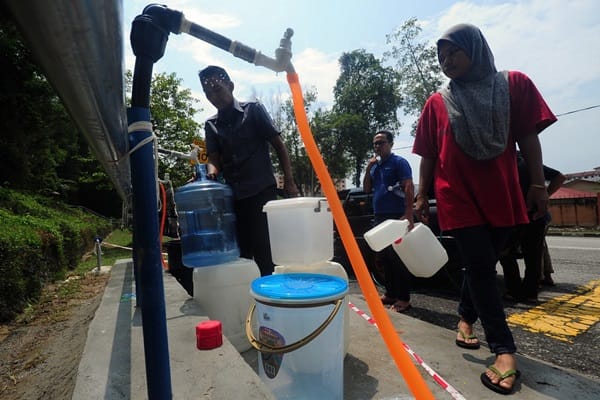
KOTA KINABALU (May 9): For years, Sabahans have lived with a bitter irony: they are surrounded by some of the region’s most abundant rainfall, yet they often wake up to empty taps.
For residents and business owners, rotational water cuts stretching up to six days have become an exhausting burden that impacts both daily life and state development. But as of May 2026, a definitive end to this crisis is finally within reach.

Cost-efficient solution for power and water
To address these chronic disruptions, the Ulu Padas Water Supply Scheme (SBAUP) has been initiated as the anchor of the State Government’s wider master plan.
With construction officially kicking off this month, Phase 1 of SBAUP will construct a new treatment plant in Beaufort, accompanied by 200km of pipelines.
Once completed in 2029, this phase alone will deliver 350 million litres per day (MLD) to residents in Sipitang, Beaufort, Kuala Penyu, Kimanis, and Kota Kinabalu.
The project is built for future growth, with a scalable capacity of up to 950 MLD to secure Sabah’s needs for the next 50 years.
Dr James Yong Hon Min of PY Konsep Perunding notes that the project stands out for its innovative integration with the Ulu Padas Hydroelectric Project.
“This is a vital water infrastructure in Sabah as our current water supply is at a critical juncture. Any disruption to our treatment plants, even scheduled maintenance, severely impacts the current domestic supply,” shared Dr James.
“Because the primary dam, which regulates the river flow, is funded and sustained by the hydroelectric scheme, the SBAUP water project is very cost-effective. This ‘dual-purpose’ approach means Sabah gains both water and energy security through a single, integrated infrastructure solution”.

Human cost: More than an inconvenience
While the engineering is complex, the “why” behind the project is simple: livelihoods are at stake.
Jeff Lu, Director of Sales and Marketing at Minyak V.W. Enterprise, lives this reality every day. His company supplies fresh water to cargo ships and island communities—a business where water is the product.
“When the city’s water supply is unstable, it becomes a massive logistical puzzle,” Jeff said.
“We can’t fill our tanks to meet commitments—it’s like trying to run a bakery when the flour delivery is unreliable. We end up spending a fortune on extra lorry trips to find water elsewhere, which drives up costs for our customers. It is a constant game of catch-up.”
Jeff believes a stable supply will be an absolute game-changer. “We could confidently expand and invest in larger facilities. If investors are setting up shop here, they need reliable utility support; being part of that chain allows us to create stable, long-term jobs for Sabahans.”
For Jeff, the project enables a better future for all. “It means families won’t have to store water in buckets for daily chores. For the economy, water is the lifeline for every hotel, restaurant, and factory. A reliable supply makes Sabah attractive to the high-quality investors who bring sustainable development.”
He added: “For us locals, it feels like the government is finally building a strong, healthy heart for Sabah. When the heart is pumping strong, every part of the body benefits. This is the long-term answer we have been waiting for.”
Fueling Sabah’s industrial engine
This sentiment echoes a broader economic necessity. Sabah’s rapid growth—such as the Sipitang Oil & Gas Industrial Park (SOGIP)—has created an exponential industrial demand that would stretch domestic supply to its breaking point without a sustainable solution.
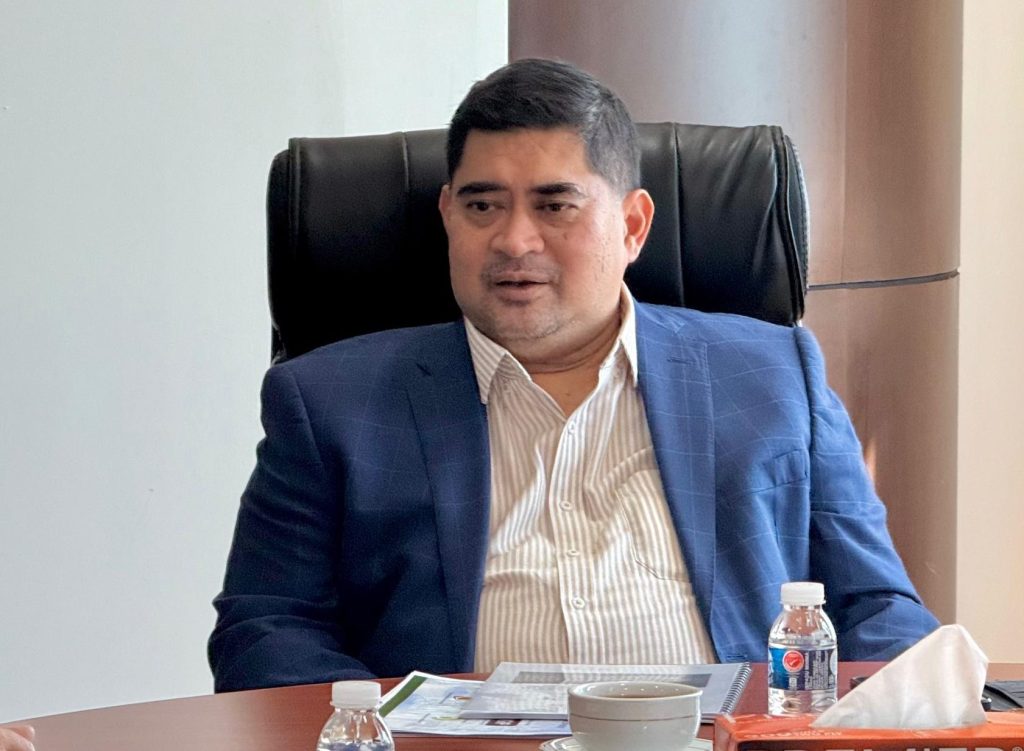
“High-quality water infrastructure and reliable electricity are critical factors in attracting foreign direct investment,” stressed Datuk Shahelmey Yahya, Chairman of Sabah Oil and Gas Development Corporation (SOGDC).
“These utilities played a pivotal role in securing approximately RM7 billion in recent investments from Chinese and South Korean companies. Securing treated water will position our industrial parks as crucial economic drivers.”
He emphasised the urgency: “Several industries are signing agreements with us over the next three to four years, making this additional water supply crucial.”
The path forward
To support communities during this transition, the state has prioritised a RM848 million investment for 2026 to stabilise the current system. This budget allows the Water Department to upgrade local facilities and expand rural supply programs as a bridge while awaiting the full commissioning of SBAUP.
With work on SBAUP now underway, the State Government’s combined efforts mark the most tangible step yet toward ending the water shortages that have long defined daily life in Sabah.